The short answer
Bernina train day trips from Milan are available year-round. Red regional trains run about hourly in every season, although the panoramic Bernina Express runs fewer departures from late October until April 23, 2027. In winter the upper line is usually covered in snow and December has under 9 hours of daylight; in summer you see green meadows, with 15-hour days in June and July. Low cloud at the Bernina Pass can hide the glaciers in any month.
If your dates are flexible, September offers the best overall balance for a first trip. Five panoramic trains a day run each way until October 3, 2027, days last about 12½ hours, and there are fewer rainy days in the Engadine, the valley around St. Moritz, than in summer. For snow, choose January to March: in an average month Pontresina, a station on the upper line, has snow on the ground 27 days or more. Golden larches are often at their best in mid-October, but days are shorter. From October 4 to late November 2027, works are reported to close the southern end of the line between Cavaglia and Tirano, with coaches replacing trains.
For a quieter train, travel Monday to Thursday; weekends and holidays are the busiest days on the line, according to the railway. On a winter trip without a tour, take a morning train north from Tirano, which climbs the whole line in daylight; guided tours set the time for you. Check the Bernina Pass forecast, and if your booking has free cancellation, decide before its deadline.
- Best overall for a first trip:
- September, but no snow
- Snow on the upper line:
- January to March, but cold
- Longest days:
- June and July, but more rainy days in the Engadine
- Golden larches:
- Mid-October, but shorter days and 2027 works reported
- Holiday trains, December 26 to January 5:
- Snow likely, but busy and dark early
- Quieter trains:
- Monday to Thursday, outside public holidays
- Live checks before you go:
- Cloud cover · snowfall · rain · RhB notices
- Daylight in mid-June 15 h 47 min
- Daylight in mid-December 8 h 37 min
- Days with snow on the ground at Pontresina, February 28
- Rainy days in September in the Upper Engadine 8
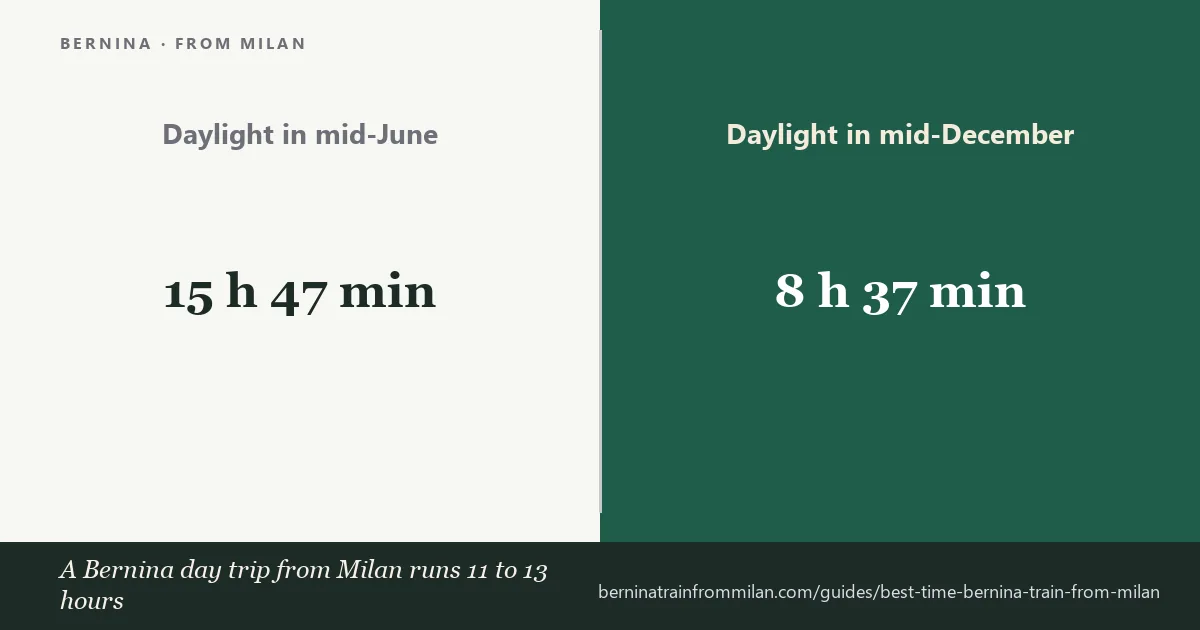
A day trip from Milan lasts 11 to 13 hours, most of it on the road, so the daylight matters more here than on a single train ride from St. Moritz. The picture outside the window changes with the season too.
Milan: Red Train & St. Moritz Day Trip
What each season looks like from the train
September: the best overall month
In September five panoramic Bernina Express trains a day still run each way over the pass, until October 3, 2027, and the red regional trains run every hour. Days are about 12½ hours long in mid-September, so a coach day from Milan runs mostly in daylight. The Upper Engadine, the high valley around St. Moritz, has about 8 rainy days in an average September against about 11 in June, July and August, and its share of possible sunshine is among the highest of the year. At the Bernina Pass the average high is 9.5 °C (49 °F), cool enough to want a jacket at Ospizio Bernina. The one thing September lacks is snow on the lower line.
June to August: long green days
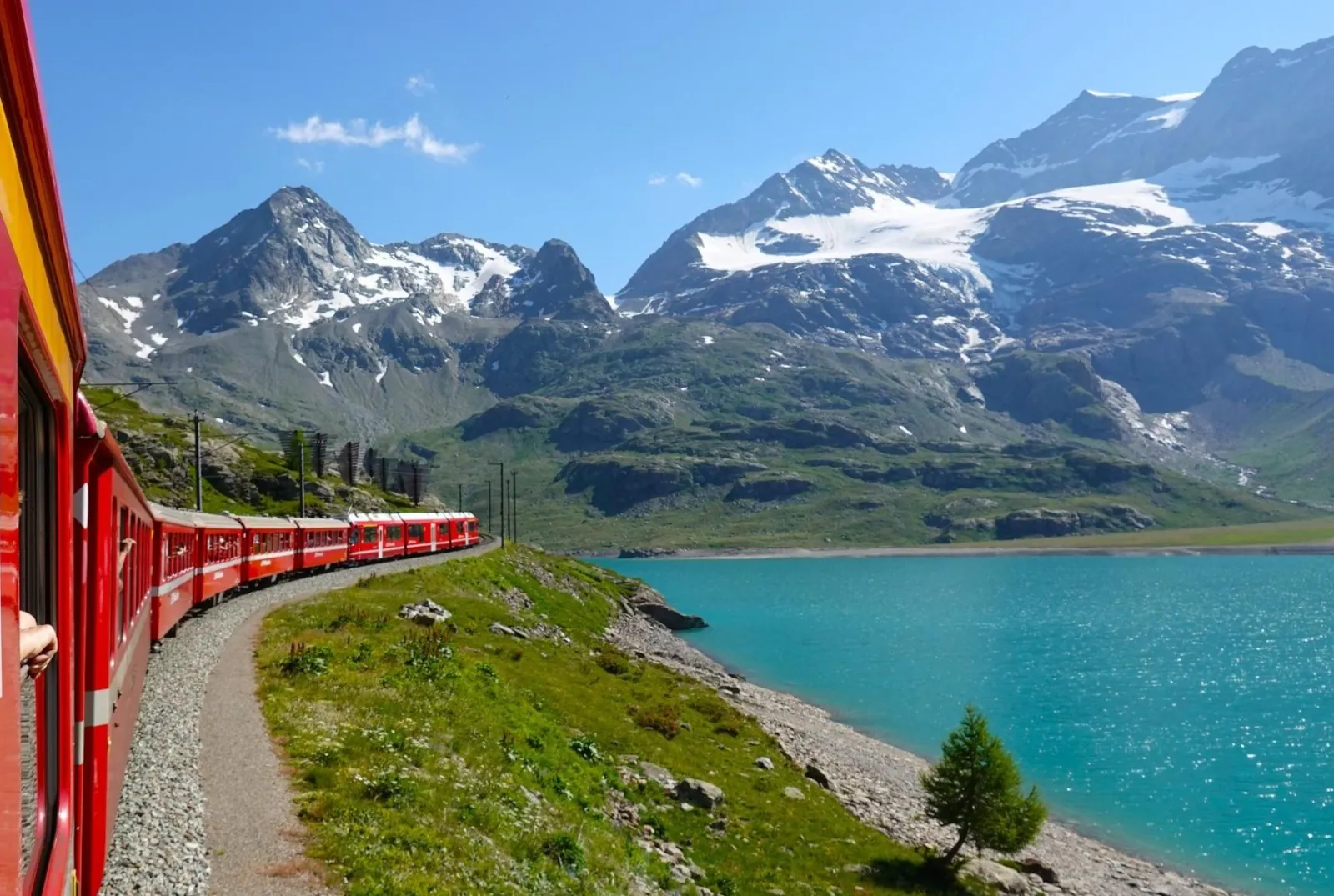
The longest days of the year come in June and July, about 15½ hours, and the meadows around Pontresina and Alp Grüm are green below the glaciers. The pass is at its warmest, with an average high of 14.4 °C (58 °F) in July. The catch is cloud: these are the wettest months in the Upper Engadine, with about 11 rainy days each, and June has a lower share of sunshine than September. Summer weekends are among the busiest days on the line, so book a weekend date early.
January to March: snow on the line
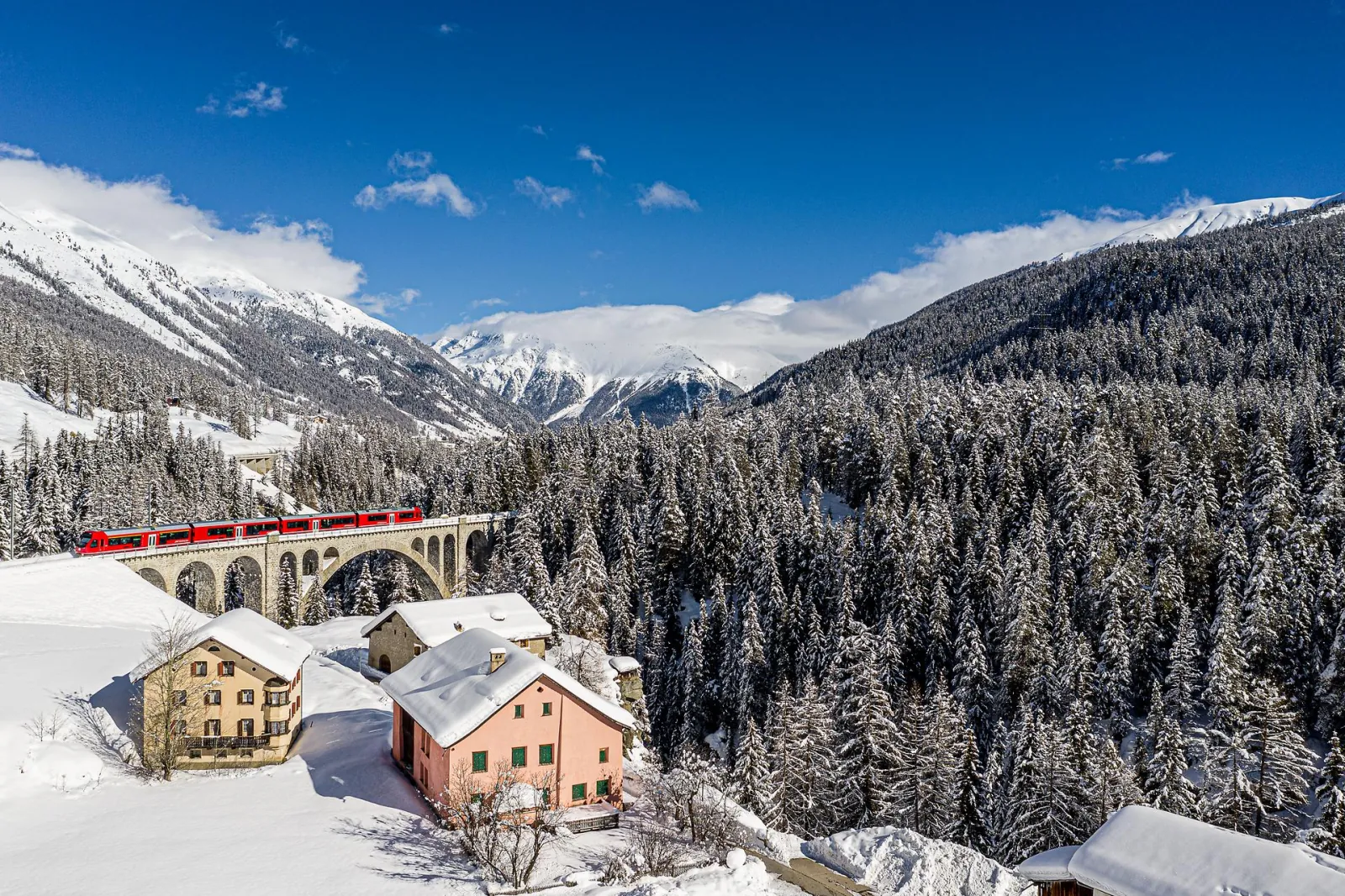
From January to March, snow lies on the ground at Pontresina on 27 to 31 days in an average month, and the Swiss avalanche institute, SLF, describes heavy snowfall and strong wind around Ospizio Bernina and Lago Bianco as the rule in winter. The Engadine has some of its sunniest weather then, with about 4 to 5 rainy or snowy days a month. The cost is cold and short days: the average high at the pass is −3.5 °C (26 °F) in January, and January days last under 9 hours. By March the days are almost 12 hours long, which makes February and March the easier months for a full day with snow.
Fall larches, December and the in-between months
Mid-October: golden larches
The Swiss National Park, in the next valley, says the larches turn gold in October and are often at their best in mid-October, before the needles fall in the first half of November. The forests along the line between Pontresina and Morteratsch and above Val Poschiavo turn the same color, and the timing moves by a week or two from year to year. Days are shorter, about 11 hours in mid-October, and from late October the winter timetable cuts the panoramic trains to two a day each way. In fall 2027, engineering work is reported to close the line between Cavaglia and Tirano from October 4 to late November, with replacement coaches. RhB had not confirmed it when we checked, so check rhb.ch before you plan a fall trip.
December: snow, short days and the holidays
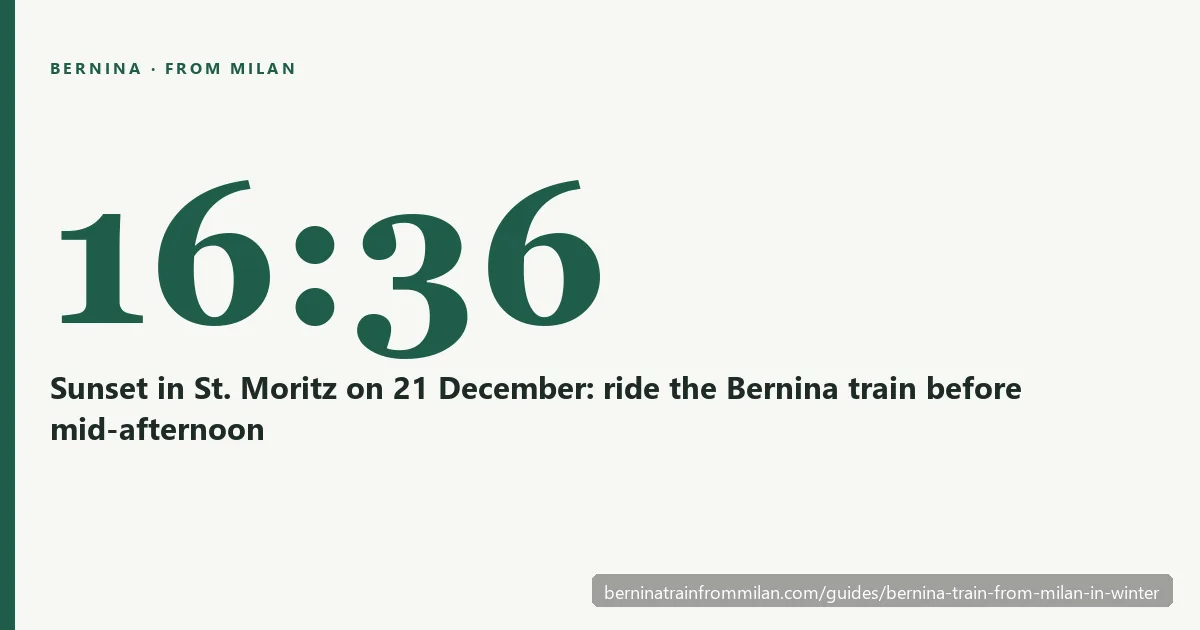
Snow is likely in December, with snow on the ground at Pontresina on about 26 days in an average December, but not certain: in 2016 there was none. These are the shortest days, under 9 hours, so on a day trip from Milan much of the coach travel is in the dark, and the Frigerio Viaggi listings warn that from late October to late February early sunsets can cut visibility on the afternoon train. RhB adds a panoramic pair on Fridays to Sundays from December 13 and daily from December 26 to January 5. Our December guide covers the holiday weeks in detail.
April, May and November
These months sit between the snow and the meadows. Snow at Pontresina comes and goes in April and November, May has the lowest share of sunshine in the Upper Engadine, and St. Moritz is a seasonal resort where some shops and restaurants keep reduced hours in spring and fall. RhB is not taking seat reservations on the regional trains for April 2027. They suit a reader whose dates are already fixed: the trains run, the views on a clear day are as good as ever, and the trains are often less full on weekdays.
Other experiences
Other Bernina train trips from Milan
More Bernina train, St. Moritz and Lake Como day trips from Milan. Open any of them to see the dates offered in your season.
Check your date
Pick your day. The checker shows which Bernina Express timetable RhB, the Rhaetian Railway that runs the line, has for that date and whether it is a busy day on the line, then what the landscape usually looks like that month, the daylight in St. Moritz and the weather at the Bernina Pass. Within the next 16 days it reads the forecast for the pass between 9 a.m. and 5 p.m.; further ahead it shows the long-term averages, and it always says which of the two you are looking at.
Bernina train day trips from Milan can be booked in every season.
With JavaScript off, this card shows the regular pattern for the year.
- Timetable:
- Red regional trains about hourly all year. Bernina Express: two panoramic trains a day each way over the pass from late October to late April, with an extra pair on winter weekends and over the holidays, and five a day each way in summer.
- Busy days:
- Weekends and public holidays, and the Christmas holidays. Monday to Thursday is quieter.
- Landscape:
- Snow on the ground at Pontresina almost every day from January to March; green meadows from June to September; golden larches around mid-October.
- Daylight:
- From about 8½ hours in December to about 15¾ hours in June.
- Weather at the pass:
- Average highs from −3.5 °C (26 °F) in January and February to 14.4 °C (58 °F) in July.
The checker puts the timetable first, because it tells you which panoramic trains run and flags reported engineering work. The busy-day row comes next. The landscape, the daylight and the weather follow, since they change what you see but not whether you can book.
The Bernina line month by month
Temperatures are averages for the Bernina Pass, at the top of the line. Rainy days and sunshine are for Samedan in the Upper Engadine, near St. Moritz; snow days are for Pontresina station on the line. Daylight is for St. Moritz in the middle of the month.
| Month | Average high at the pass | Average low at the pass | Rainy days, Engadine | Share of possible sunshine | Days with snow at Pontresina | Daylight |
|---|---|---|---|---|---|---|
| January | −3.5 °C (26 °F) | −9.8 °C (14 °F) | 5 | 59% | 31 | 8 h 59 min |
| February | −3.5 °C (26 °F) | −10.0 °C (14 °F) | 4 | 58% | 28 | 10 h 20 min |
| March | −0.8 °C (31 °F) | −7.6 °C (18 °F) | 4 | 56% | 27 | 11 h 51 min |
| April | 2.2 °C (36 °F) | −4.2 °C (24 °F) | 6 | 51% | 10 | 13 h 32 min |
| May | 7.3 °C (45 °F) | 0.3 °C (33 °F) | 9 | 48% | 2 | 14 h 58 min |
| June | 11.9 °C (53 °F) | 4.2 °C (40 °F) | 11 | 52% | 0 | 15 h 47 min |
| July | 14.4 °C (58 °F) | 6.5 °C (44 °F) | 11 | 58% | 0 | 15 h 28 min |
| August | 13.7 °C (57 °F) | 6.3 °C (43 °F) | 11 | 57% | 0 | 14 h 13 min |
| September | 9.5 °C (49 °F) | 3.1 °C (38 °F) | 8 | 58% | 0 | 12 h 36 min |
| October | 5.6 °C (42 °F) | −0.2 °C (32 °F) | 8 | 57% | 3 | 10 h 58 min |
| November | 0.3 °C (33 °F) | −4.9 °C (23 °F) | 8 | 51% | 16 | 9 h 27 min |
| December | −2.5 °C (28 °F) | −8.4 °C (17 °F) | 6 | 52% | 26 | 8 h 37 min |
A rainy day is a day with at least 1 mm of rain or melted snow. The sunshine share is the part of the possible sunshine hours that the sun actually shines, so 58% means a little under six hours in ten. Two things stand out for a day on the train. Winter is not the cloudiest season up here: January and February have the fewest wet days and some of the highest sunshine shares. And the summer months, warm as they are, have the most rainy days, which is when cloud is most likely to sit on the pass.
Daylight on a 12-hour day
A Bernina day trip from Milan lasts 11 to 13 hours, with roughly 2½ to 3½ hours on the coach each way and about 2 to 2½ hours on the train. From November to January there are under 10 hours of daylight in St. Moritz, so the early drive and the drive home run in the dark and the train ride has to fall in the middle of the day. From April to August the light covers the whole day.
If you are going on your own by train, the hour matters more in winter. A morning train north from Tirano climbs the whole line in daylight, while the afternoon panoramic train south from St. Moritz reaches Val Poschiavo around sunset in December. The winter guide has the sunrise and sunset times for each winter month, and the date checker above gives them for your day.
Which trip suits which season
The Milan red train and St. Moritz day trip (our review) runs the same plan all year: coach to Tirano, the red regional train over the pass to St. Moritz, then back over the Maloja Pass. Its windows open, which helps with summer and fall photos. The day can run in reverse or change for weather, traffic or railway operations.
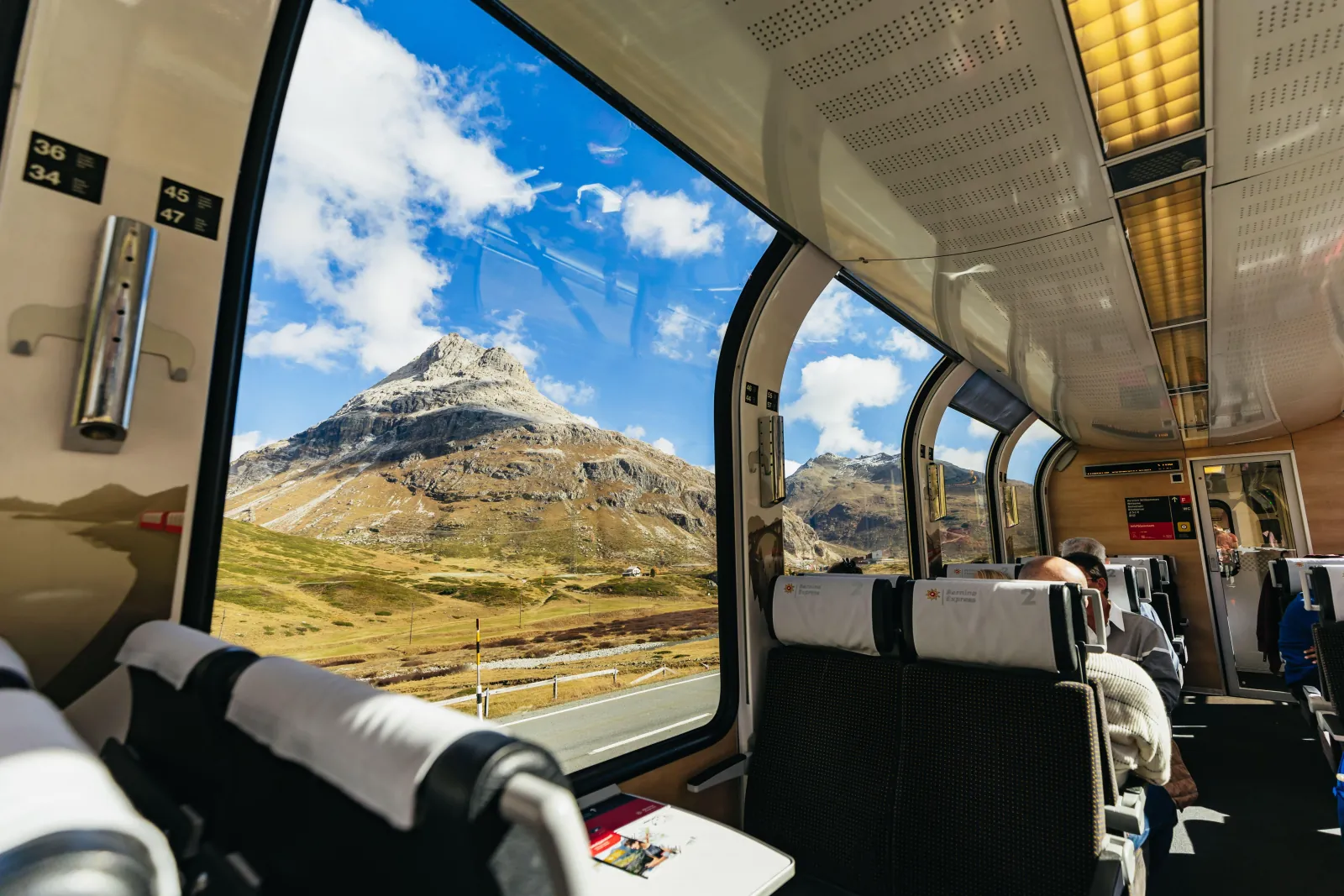
If you want the curved glass of the panoramic train, the panoramic Bernina Express trip from Milan (our review) includes a seat in a panoramic coach on its Tour with Panoramic Carriage option. The glass suits a snowy day, though reflections show in photos and the windows do not open. Its listing warns that early sunsets from late October to late February can cut visibility on the afternoon train.
The Bernina train, Swiss Alps and St. Moritz day trip (our review) rides the regional train too; on some dates it uses the Albula line between St. Moritz and Thusis, so check the option for your date. The differences between the two trains are in our Bernina Express vs red train guide.
Weather on the day
The trains are heated and enclosed, so rain or snow does not spoil the ride itself, but low cloud at the pass can hide the Palü glacier, Piz Bernina and Lago Bianco in any season. If your booking has free cancellation, check the forecast for the Bernina Pass before its deadline, and move to a clearer day if heavy cloud is forecast all day.
In winter, heavy snow and wind can delay trains and roads. The Maloja and Bernina pass roads are open all year, but winter tires are compulsory and chains or short closures can be needed at short notice, so the tour may change its order or route on the day. Check the RhB service notices on the morning you travel, bring your passport or ID card for the two border crossings, and pack a warm layer for the stops at the pass.
Frequently asked questions
What is the best month for the Bernina Express from Milan?
September, if your dates are flexible. Five panoramic trains a day run each way until October 3, 2027, days last about 12½ hours and there are fewer rainy days than in June to August. For snow, choose January to March instead.
Is the Bernina Express better in winter or summer?
It depends on what you want to see. From January to March the upper line is usually snowy and the weather is often clear, but days are short and the pass is well below freezing. Summer has green meadows, the longest days and five panoramic trains each way, with more rainy days.
When is the best time to do the Bernina Express for snow?
January to March, when snow lies on the ground at Pontresina on almost every day of an average month. February and March have more daylight than January. December usually has snow too, but not every year, and it has the shortest days and the holiday crowds.
Does the Bernina train run in winter?
Yes. The red regional trains run about hourly all year, and the Bernina Express runs two panoramic trains a day each way over the pass in the winter timetable, with a third on Fridays to Sundays from December 13 and daily from December 26 to January 5.
When do the larches turn golden along the Bernina line?
Usually in October, and often at their best in mid-October, according to the Swiss National Park; the needles fall in the first half of November. In 2027 the line between Cavaglia and Tirano is reported to close from October 4 to late November, so check rhb.ch first.
How busy is the Bernina train at Christmas?
Busy. RhB says weekends and public holidays are its busiest days, and it runs extra panoramic trains daily from December 26 to January 5. Book early for those dates, or go Monday to Thursday before Christmas.
How we know
Sources, method and limits
Climate. Average highs and lows, frost and ice days are MeteoSwiss climate normals for 1991 to 2020 at its Passo del Bernina station (2,260 m), at the pass the train crosses. Rainy days, rain totals and the share of possible sunshine are the same normals for Samedan (1,709 m) in the Upper Engadine, because the pass station has no sunshine or rain normal; Poschiavo / Robbia (1,078 m) in the lower valley is about 7 °C warmer by day and has slightly more rainy days. Source: MeteoSwiss climate normals (data file).
Snow. Days with snow on the ground are the monthly count at the MeteoSwiss manual station at Pontresina (1,787 m), averaged over the 15 winters from 2011 to 2025 because the station’s 1991 to 2020 record has gaps: MeteoSwiss open data, Pontresina. December has ranged from 0 days (2016) to 31, November from 0 to 29. The pass is about 470 m higher and keeps its snow longer. The description of winter at Ospizio Bernina is from SLF, the WSL Institute for Snow and Avalanche Research.
Larches. Swiss National Park, the seasons: golden in October, often best in mid-October, needles falling in the first half of November.
Timetables and crowds. Timetable periods and panoramic trains are from the RhB Bernina Express page, checked November 11, 2026, and the Swiss timetable feed. The busiest days are RhB’s own statement on its Bernina line tips page. The April 2027 reservation note is from RhB Bernina line reservations. The 2027 Cavaglia to Tirano closure is reported by two travel sites citing RhB’s 2027 sales manual and was not on any RhB page we could read. For context only, St. Moritz hotel overnight stays from the Swiss Federal Statistical Office (BFS) were highest in January, February and December 2025 and lowest in November, April and May: BFS hotel statistics by commune. They measure resort stays, mostly skiing and summer holidays, not how full a train is, so we do not use them to rank months.
Roads. Maloja and Bernina pass road status from alpen-paesse.ch, a private road-status service.
Daylight. Computed with the NOAA solar-position method for St. Moritz, in Swiss time, to within a few minutes; mountains hide the sun earlier in the valleys.
The date checker. Inside 16 days it reads the Open-Meteo hourly forecast for the Bernina Pass between 9 a.m. and 5 p.m. (cloud cover, precipitation and temperature); beyond that it shows the MeteoSwiss averages above. The public holidays it flags are those of Switzerland, Graubünden and Italy.
Tours. Prices, itineraries and listing notes were read from the live GetYourGuide listings on November 11 and 12, 2026. Prices are from the cheapest real date checked and change by date.
Where the evidence stops. These numbers cannot tell you how full a given train will be: nobody publishes how full the Bernina line is by month, so the only crowd statement here is RhB’s own about weekends, holidays and weekdays. The averages are not a forecast: they describe many years, not your day; the forecast for your date always outranks the table. Larch timing and snow cover move from year to year, and the summer 2027 regional timetable after mid-February 2027 was not yet readable.
Pick your day over the Alps
Most day trips from Milan ride the regional red train; only some sell a guaranteed seat on the panoramic Bernina Express. Check what your date offers.
Check dates and prices